
Why It Is Time to Feel More Human Than Ever
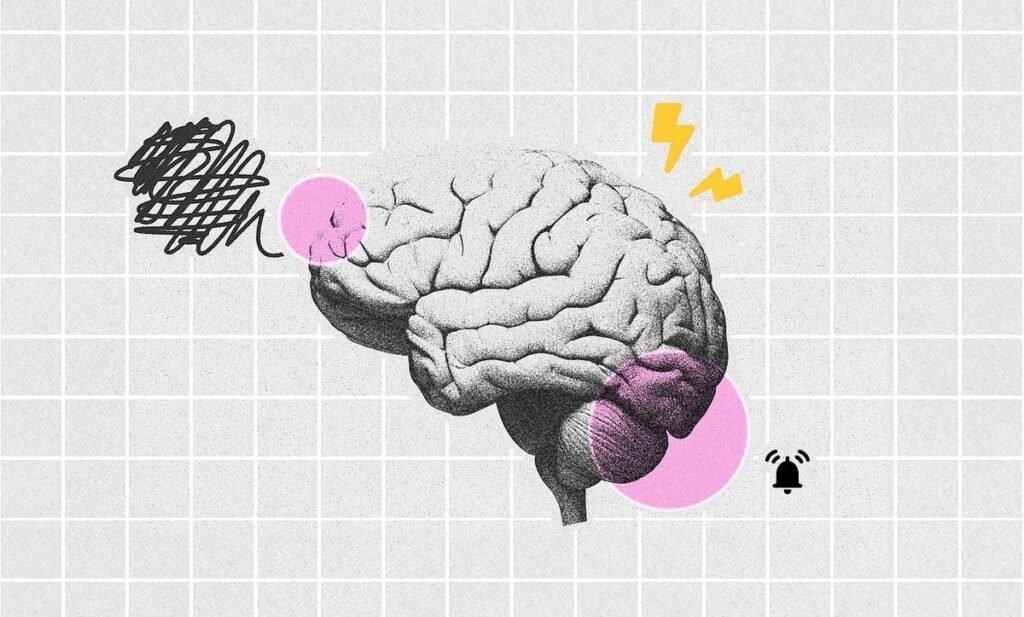
The rise of artificial intelligence marks one of the most defining moments in modern history. Unlike previous technological shifts, this one does not merely extend human ability; it imitates it. Machines now write, analyze, design, translate, predict, and converse in ways that once belonged exclusively to the human mind. What once felt like science fiction has quietly entered everyday life.
This shift has triggered both excitement and unease. Governments invest billions. Corporations race for dominance. Universities rewrite curricula. Workplaces reorganize around automation. Amid all this movement, a more fundamental question is often overlooked: what happens to the human role when intelligence itself becomes reproducible?
Artificial intelligence does not think in the human sense. It calculates probabilities based on enormous volumes of data. It recognizes patterns faster than any person could. It does not understand meaning; it predicts language that resembles meaning. Yet the imitation has become so refined that the difference is increasingly difficult to notice on the surface.
This blurring is where the real tension begins.
Human intelligence is not merely cognitive. It is emotional, moral, and experiential. A person’s judgment is shaped by memory, regret, fear, hope, culture, and consequence. A machine does not grow up in a household. It does not experience scarcity. It does not internalize loss. It does not feel responsibility when its decision affects another life.
AI can recommend an action.
A human must live with the outcome.
That distinction matters more than ever.
Modern society, however, increasingly rewards machine-like behavior from people. Speed is prioritized over reflection. Productivity over understanding. Response time over response quality. In professional environments, individuals are expected to function continuously, adapt instantly, and deliver without pause. Human limits are treated as inefficiencies rather than realities.
In this climate, artificial intelligence is not merely replacing tasks; it is reshaping expectations of what it means to function well.
The danger is not technological advancement itself. The danger is philosophical confusion , mistaking output for wisdom and efficiency for intelligence. When society begins to treat algorithmic answers as neutral or objective, it forgets that every system is trained on human history, and human history is flawed.
Bias, inequality, and distortion do not disappear when data becomes large. They scale.
A machine cannot question the morality of its training data. It cannot pause to consider social impact. It cannot feel discomfort when a conclusion, though statistically accurate, may be ethically harmful. These judgments require conscience — something no system possesses.
This is why the human role cannot be reduced to oversight alone.
As AI grows more capable, humans are increasingly needed not for execution, but for interpretation. Not for speed, but for judgment. Not for replication, but for responsibility. Decisions involving healthcare, law, warfare, hiring, surveillance, and education cannot rely solely on probability models. They demand values.
Values do not emerge from data.
They emerge from lived experience.
A society that defers moral decisions to systems risks distancing itself from accountability. When outcomes are blamed on algorithms, responsibility becomes diluted. The phrase “the system decided” quietly removes the human hand from the result — and with it, the obligation to answer for harm.
History shows that progress without ethical grounding often outpaces wisdom. Technology advances quickly; moral maturity does not. This gap is where crises form.
Feeling human, in this context, is not sentimental. It is structural.
To feel human is to recognize limits. To question certainty. To acknowledge doubt. These qualities are increasingly undervalued in digital environments, yet they are essential for sound decision-making. A human who hesitates may prevent irreversible damage. A system that never hesitates cannot.
AI does not understand silence. Humans do. Silence often precedes empathy, reflection, and restraint.
In a world optimized for immediacy, restraint becomes a rare skill.
There is also a deeper psychological shift taking place. As machines perform intellectual labor once associated with identity and purpose, individuals begin to question their relevance. When creativity, writing, and analysis can be automated, people may feel reduced to replaceable components rather than conscious contributors.
This erosion of meaning carries long-term consequences.
Human dignity has always been tied to contribution — not merely economic output, but social and emotional participation. When worth is measured only by productivity, humanity itself becomes conditional. Those who cannot keep pace risk invisibility.
Artificial intelligence does not suffer from irrelevance. Humans do.
That is why preserving the distinction between human and machine is not resistance to progress; it is preservation of agency. Humans must not compete with AI on its terms. Speed, volume, and consistency are domains machines will always dominate.
Human value lies elsewhere.
It lies in empathy that cannot be simulated. In moral courage that cannot be trained. In accountability that cannot be outsourced. In the ability to care — not because it is efficient, but because it is right.
AI can assist decisions.
It cannot own them.
As societies integrate intelligent systems deeper into governance, education, and work, the central question should not be how advanced machines become, but how consciously humans choose to remain human.
Progress that forgets compassion becomes cold.
Innovation without ethics becomes dangerous.
Intelligence without humanity becomes hollow.
The future will undoubtedly include artificial intelligence at every level of life. That future, however, must still be shaped by people capable of reflection, responsibility, and restraint.
In an age where intelligence can be manufactured, humanity must be protected.
Not because machines are a threat — but because forgetting what makes us human would be.